YC Spring 2026 Batch Trends: What Actually Wins Now

Co-founder at King’s Cross Labs · ex-LinkedIn PM & Forbes 30 Under 30
Send this guide to yourself
Get the link in your inbox so you can read it whenever you're ready.
Your email will also be saved for future updates.
95% of the new YC class is touching AI now. That means AI is officially not the differentiator anymore. When almost everyone in the batch has the same baseline, your edge has to come from somewhere else.
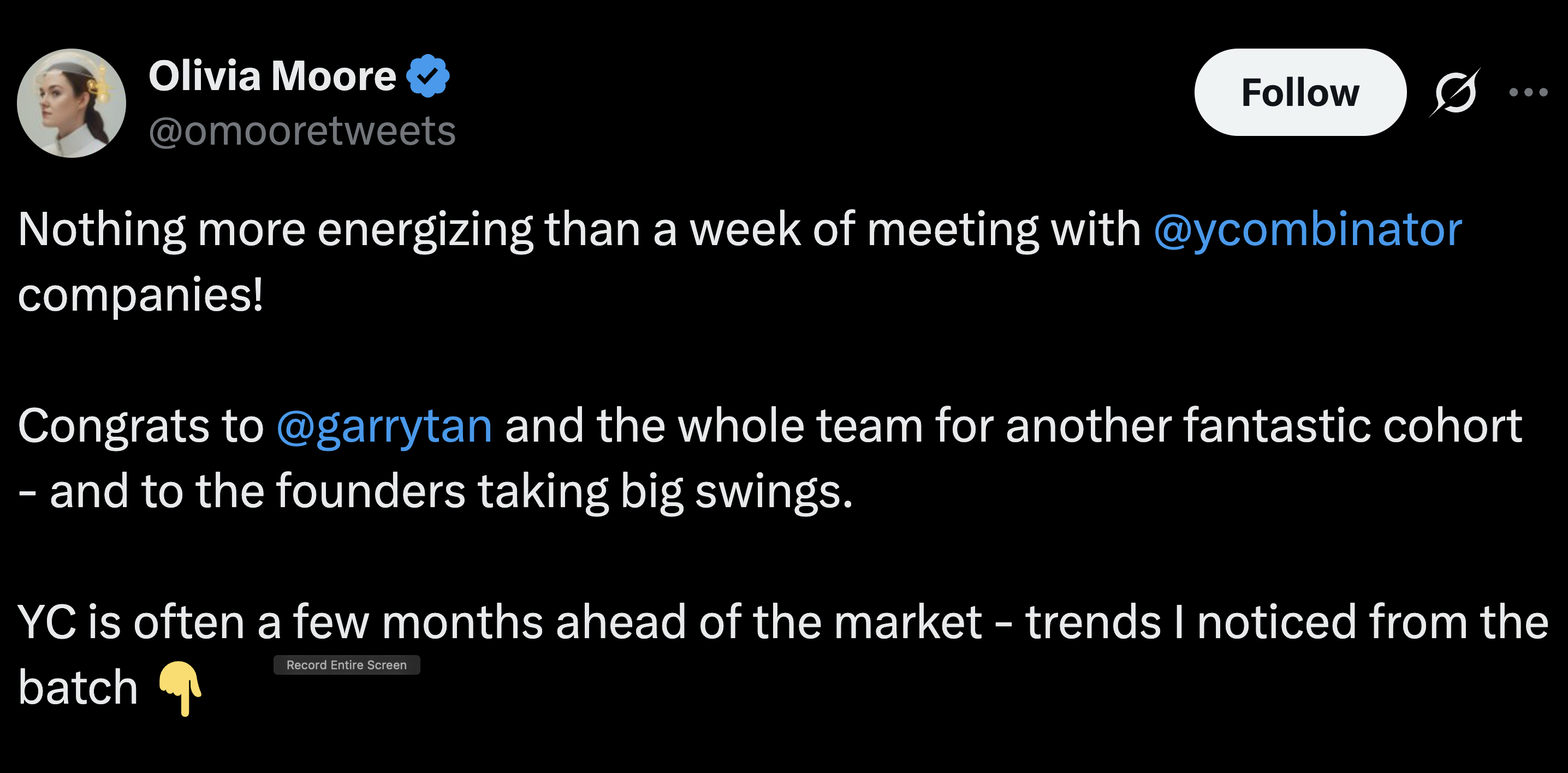
I went through the numbers on YC's Spring 2026 batch because YC is usually the clearest signal of where startups are heading 12 to 18 months ahead of everyone else.
Why this matters
Last batch, 85% of companies were AI-first. I figured we'd hit a ceiling. We didn't. This time 95% touch AI, and 80% are AI-native, meaning the AI isn't a feature bolted onto the product. The AI is the product. Only 10 companies out of 196 don't use AI at all.
If you're building a startup, raising money, or hiring in tech right now, this batch tells you where the market is going. And it's not "add AI to your pitch deck."
Key insight: When 86 teams build the same kind of product, your edge isn't the tech. It's the vertical you pick and how fast you ship.
Three trends from YC Spring 2026
1. AI isn't a feature anymore. It's the whole company.
80% of this batch is AI-native. Last batch was 85% AI-first and everyone called that the ceiling. It wasn't.
The shift is subtle but important. "AI-first" meant AI was central to the product. "AI-native" means you couldn't remove the AI and still have a product. The model isn't a helper. It's the engine.
2. Agents are the real headline.
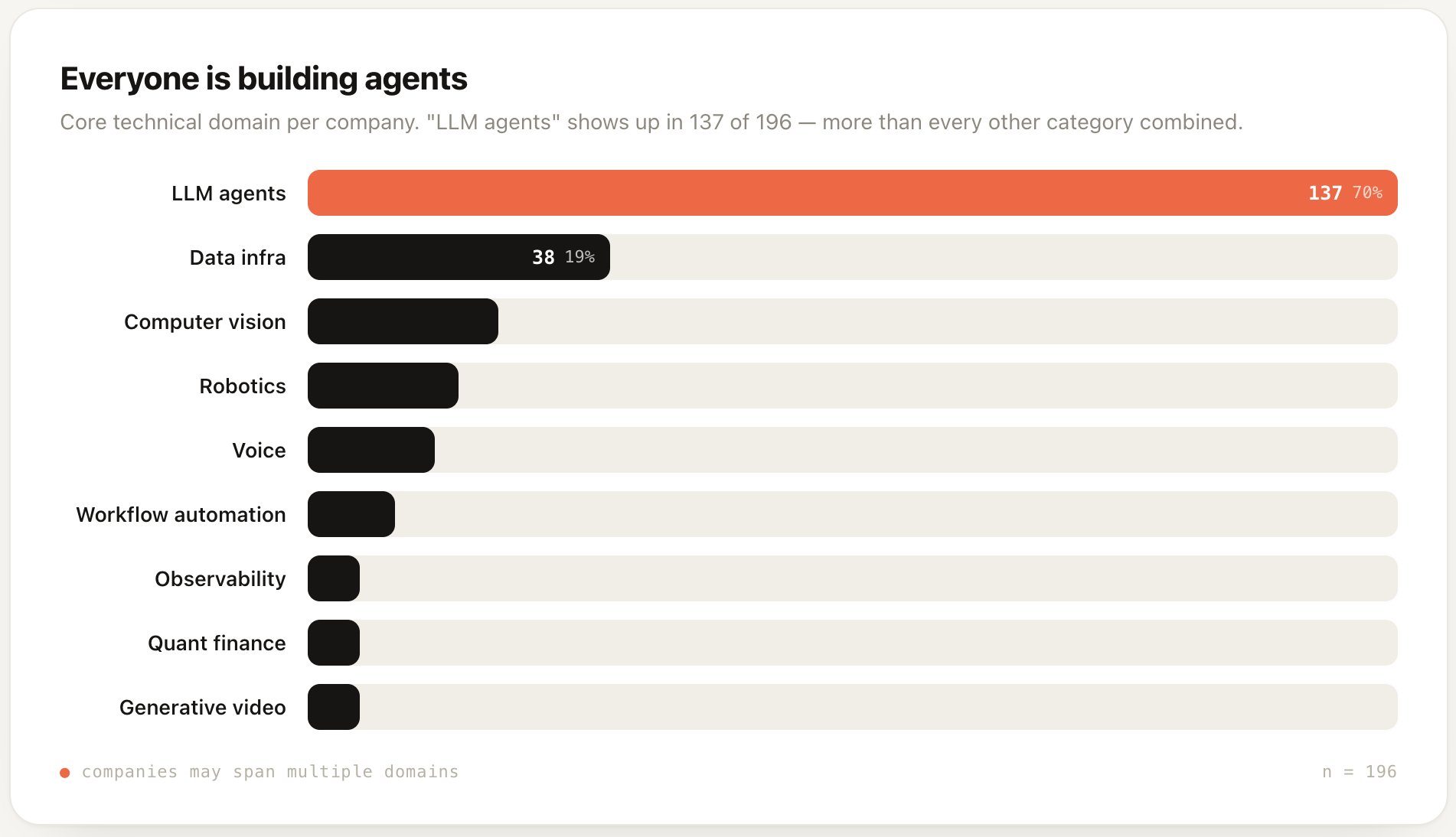
137 of those 196 companies, that's 70%, are building AI agents. That's more than every other technical category combined. Data infra is a distant second at 38. Computer vision, robotics, and voice all trail.
A year ago "AI agent" was a pitch deck buzzword. Now it's the baseline. The interesting question stopped being whether you use agents and became which job you point them at.
3. This is a B2B batch.
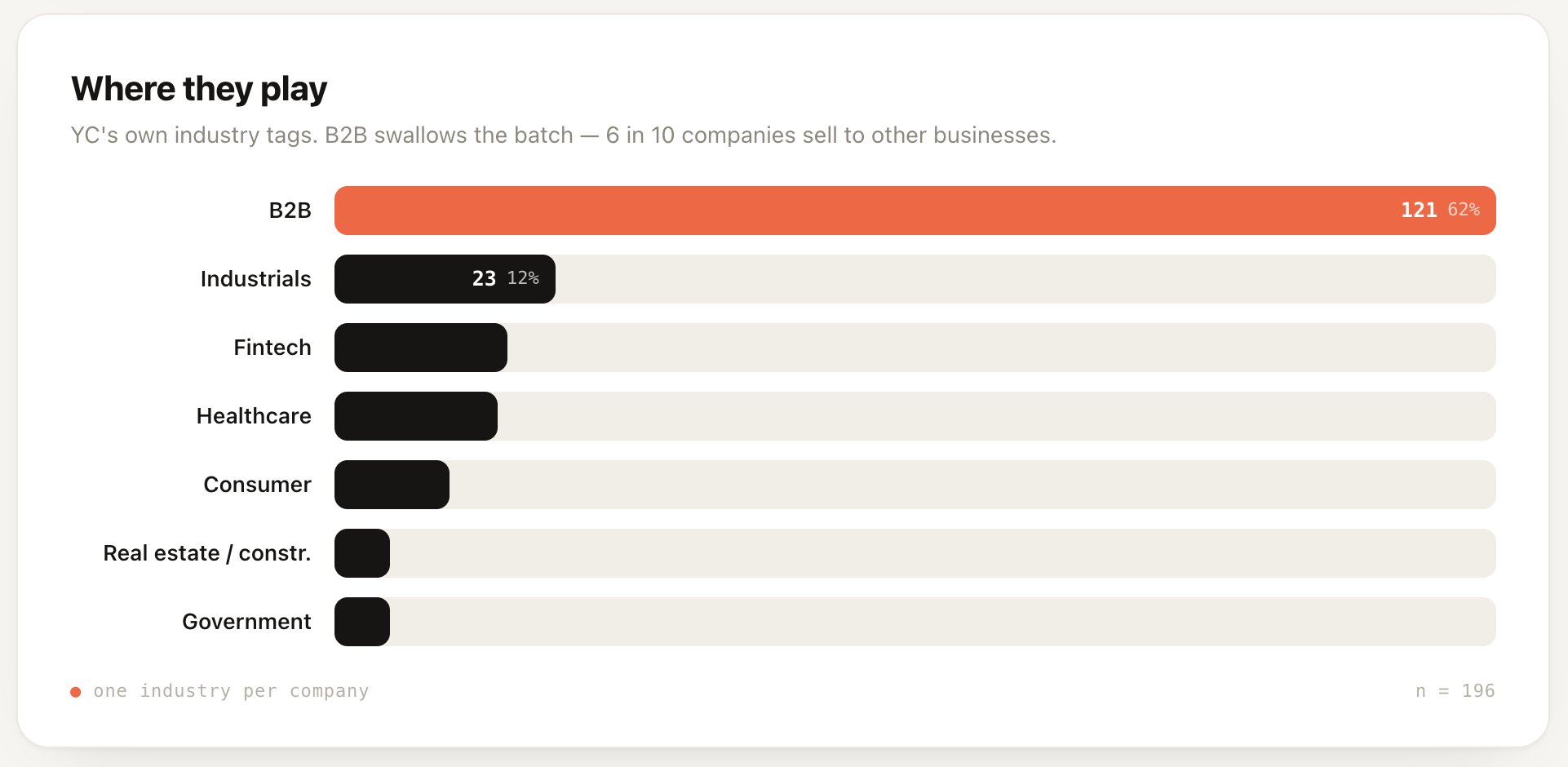
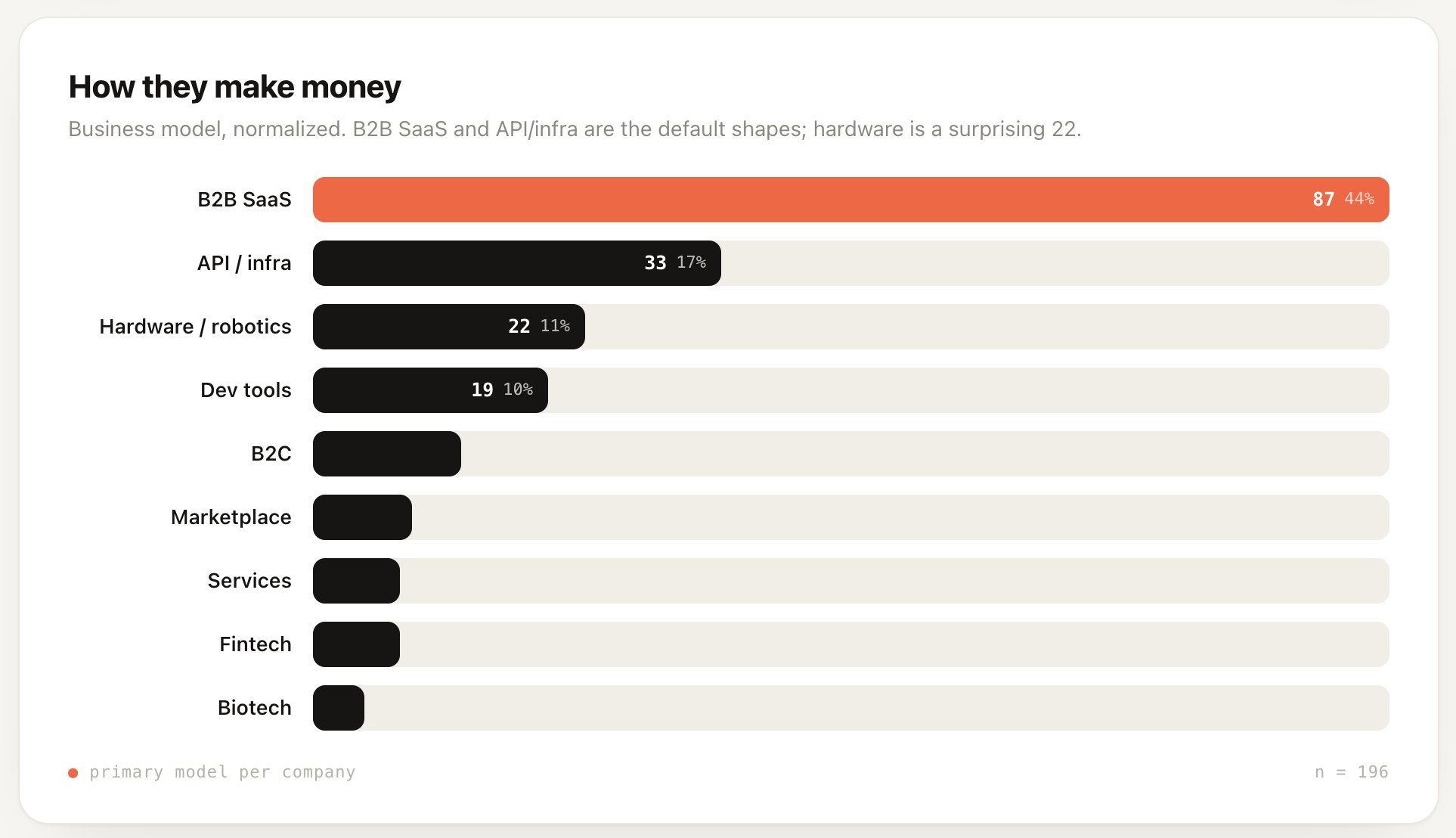
62% sell to other businesses. Consumer is just 12 companies. The single most common company profile is an AI-native "agent as a service" (AaaS). 86 companies, 44% of the batch, fit that description.
That's also the risk. When 86 teams build the same kind of product, the advantage isn't the technology. It's the specific vertical and how fast they can bring it to market.
What actually wins instead
When everyone has the same tools, you win on execution and distribution. This has always been true, but now more than ever.
This batch won't be won on who had the smartest idea. It'll be won on who executes and gets in front of customers fastest.
1. Pick a vertical, not a category
"AI agent for X" is not a moat when 86 companies are doing the same thing. Pick a specific industry, workflow, or customer segment and go deep. The team that understands one vertical's pain points will beat the team with a generic agent platform.
2. Ship before you optimize
Speed is the new insight. In a batch where 95% touch AI and the product is faster to build, getting to market first matters more than having the perfect architecture. Launch ugly. Talk to customers. Iterate.
3. Own distribution early
If the product is easier to build, distribution becomes the bottleneck. Start building your audience, partnerships, or sales motion on day one. Don't wait until the product is "ready."
4. Sell outcomes, not technology
Buyers in this batch's target market (B2B) don't care that you use agents. They care that you save them money, time, or headcount. Frame everything in terms of the job done, not the tech stack underneath.
Additional Reading
Here are some related guides to check out:
Frequently asked questions
- What are the biggest startup trends from YC's Spring 2026 batch?
- Three stand out. First, AI is now table stakes: 95% of the batch touches AI and 80% are AI-native, meaning you couldn't remove the AI and still have a product. Second, agents are the headline, with 70% building AI agents, more than every other technical category combined. Third, it's heavily B2B: 62% sell to other businesses, and the most common profile is an AI-native "agent as a service." The takeaway is that AI is no longer the differentiator.
- If everyone's building AI startups, how do you stand out?
- You win on execution and distribution, not the tech. When 86 teams build the same kind of agent product, the edge is the specific vertical you pick and how fast you get to customers. Go deep on one industry's pain points instead of a generic platform, ship before you optimize, build distribution from day one, and sell outcomes (time, money, headcount saved) rather than the tech stack. Speed is the new insight.
- What's the difference between "AI-first" and "AI-native"?
- AI-first means AI is central to the product; AI-native means you couldn't remove the AI and still have a product, so the model isn't a helper, it's the engine. The YC Spring 2026 batch shifted from 85% AI-first to 80% AI-native, a meaningful jump in how deeply AI is embedded. It signals that bolting AI onto an existing product is no longer enough.
Want to build your first AI agent?
Build Your First Agent 101 is the next step! You'll get step by step guides, video tutorials and starter prompts to create your first agent in half a day, customized to your own workflow.
Learn more