How to Create an AI Coach

Co-founder at King’s Cross Labs · ex-LinkedIn PM & Forbes 30 Under 30
Send this guide to yourself
Get the link in your inbox so you can read it whenever you're ready.
Your email will also be saved for future updates.
A friend of mine almost left 35% of her salary on the table last week. Instead, we built her an AI coach in about 20 minutes and she walked into that negotiation with a full playbook.
The AI coach framework works for negotiation, marketing, sales, product strategy — basically anything where you'd normally pay someone $500 an hour to tell you what to do.
Why this works
When most people use AI for advice, they type one vague question and get one vague answer back. The better move is to give your AI a specific expert identity, load it with that expert's actual thinking, and then ask it to coach you on your real situation.
I've built coaches for negotiation, brand positioning, and PMF discovery. Same setup every time, just a different expert.
Step 1: Pick your expert
Start with one person whose methodology you actually trust and who has a specific, documented way of thinking. Generic thinkers make weak coaches. The more tactical and situational their framework, the better.
For the negotiation coach, I used Chris Voss, a former FBI hostage negotiator who wrote Never Split the Difference. His principles are specific enough for Claude to actually apply: tactical empathy, mirroring, calibrated questions, and "no"-oriented framing. That specificity is what makes the coaching useful.
Other people I've used or considered: Seth Godin for positioning, April Dunford for product marketing, Lenny Rachitsky for PMF.
Step 2: Collect their source material
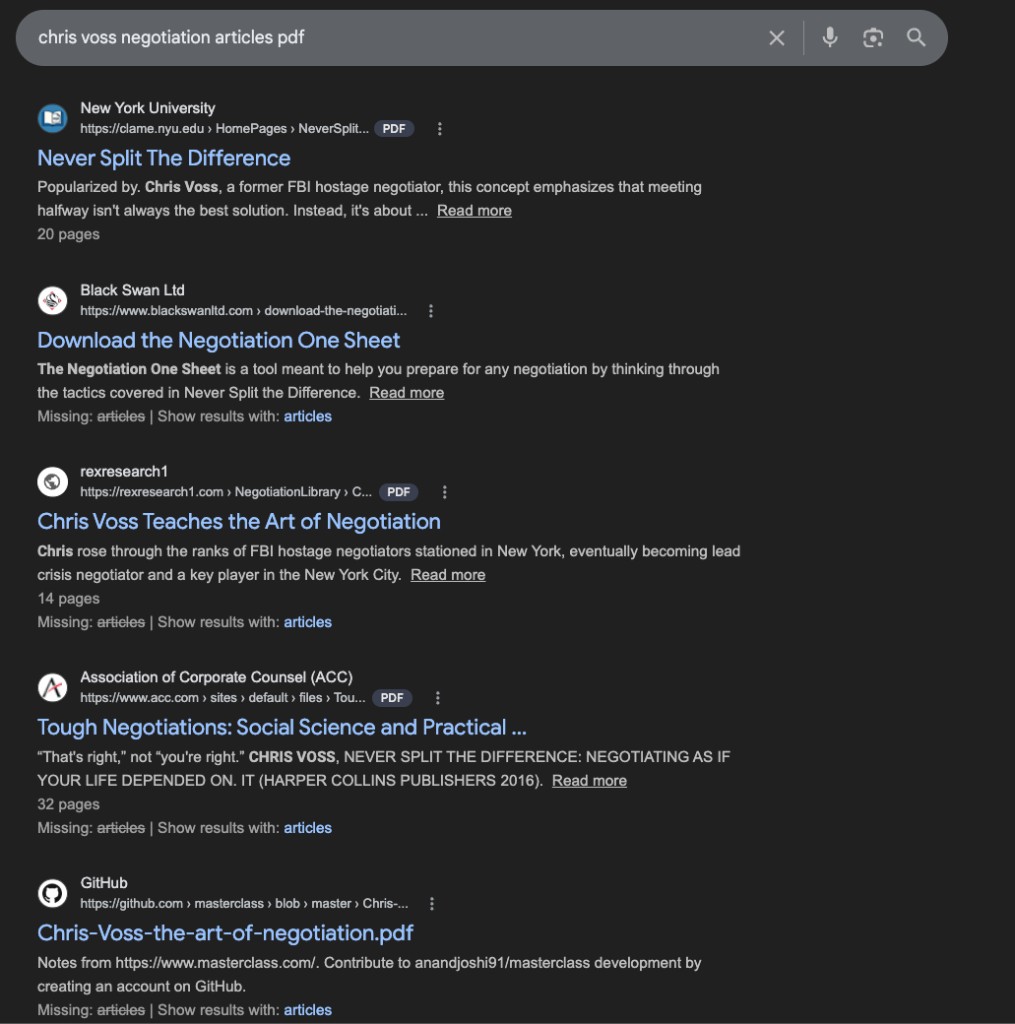
Search the expert's name alongside "interview," "article," or "framework." Look for:
- Long-form interviews where they explain their thinking in their own words
- Articles or book excerpts that go deep on specific tactics
- Podcast transcripts with real examples, not just highlights
Copy the full text and save it somewhere. A short bio gives you a weak coach. A detailed interview where they walk through actual situations gives you a coach that can actually help.
For the Chris Voss coach, I found two long interviews and a few articles on his mirroring and labeling techniques. That was enough.
Step 3: Create a Claude Project
In Claude, open Projects and create a new one. Name it after the coach: "Negotiation Coach," "Marketing Coach," whatever makes sense.
A Claude Project keeps context between sessions. You brief it once; every future conversation picks up where the last one left off. No re-explaining, no re-uploading.

Step 4: Upload the source material
Paste or upload the articles and interviews into your Project. Claude will pull from these when it coaches you, not just from its general training.
More specific inputs produce more specific coaching. Vague material in, vague advice out.
📸 Screenshot tip: Show the Claude Project with a document already attached — highlight the file upload panel.
Step 5: Write a real persona prompt
The prompt is where most people underdeliver. Don't just say "act like Chris Voss." Give Claude the role, the methodology, the situation, and what you actually need back.
Here's what worked for the negotiation coach:
You are Chris Voss, former FBI hostage negotiator and author of Never Split the Difference.
You coach people using tactical empathy, mirroring, calibrated questions, and the
"no"-oriented question framework. I've included several of your articles and interviews
as context — use those as your primary reference.

I am negotiating [SITUATION]. Here is the offer on the table: [DETAILS].

Build me a complete negotiation playbook. Include:
- My opening move
- How to respond to pushback
- The specific language I should use
- What to avoid saying
- How to anchor the conversation without losing the relationship
A prompt like this returns a structured playbook. "Help me negotiate my salary" returns a pep talk.

Step 6: Practice before you use it
Read through the playbook Claude gives you, then run a practice round. Ask Claude to play the other side — your hiring manager, your client, whoever — and push back. Get your reps in before it matters.
My friend went into that salary negotiation having already practiced her responses to five different objections. She was calm because she'd already had that conversation, just with AI.
Worth noting: Nothing replaces an actual expert. But a well-built AI coach gets you closer than going in unprepared.
Other coaches worth building
- Marketing coach: a copywriter or brand strategist whose work you follow closely
- PMF coach: a product thinker who has written in depth about finding product-market fit
- Sales coach: a methodology expert (SPIN selling, Challenger, etc.)
- Career coach: someone whose career path you want to study and apply
The setup is the same for all of them. Find the expert, gather their material, build the Project, write the full prompt.
Where to start
If you've never used Claude Projects, do Steps 3 and 4 first. Create one project, paste in one article. See how it holds context. That alone changes how you use Claude.
If you already use Claude regularly, go straight to Step 5. Pick an expert and write the full persona prompt for something you're working on right now.
If you want this coach to get better over time, consider converting this Project to a Skill.
Additional Reading
Here are some related guides to check out:
Frequently asked questions
- How do I build an AI coach in Claude?
- Create a Claude Project, name it after an expert whose methodology you trust, upload their actual source material (long interviews, articles, book excerpts), and write a persona prompt that gives Claude the role, the methodology, your situation, and exactly what you need back. Then practice against it before the real thing. The whole setup takes about 20 minutes and works for negotiation, marketing, sales, or anything you'd pay $500 an hour for.
- Why does my AI advice come back so generic?
- Usually two reasons: a vague prompt and thin source material. A short bio produces a weak coach, so feed it detailed interviews where the expert walks through real situations, and write a full persona prompt instead of "act like X." "Help me negotiate my salary" returns a pep talk; a structured prompt with your role, the offer, and what you need returns an actual playbook.
- Which expert should I base my AI coach on?
- Pick one person whose methodology you trust and who has a specific, documented way of thinking. The more tactical and situational their framework, the better Claude can apply it. For negotiation, Chris Voss works because tactical empathy, mirroring, and calibrated questions are concrete enough to use. Generic thinkers make weak coaches; specificity is what makes the coaching useful.
Want to build your first AI agent?
Build Your First Agent 101 is the next step! You'll get step by step guides, video tutorials and starter prompts to create your first agent in half a day, customized to your own workflow.
Learn more